Finding our way to The Way one situation at a time. I don't know how great it will be, but I expect it will be interesting, and I look forward to it going on past all reason because wonder is just that way. Are you coming or not?
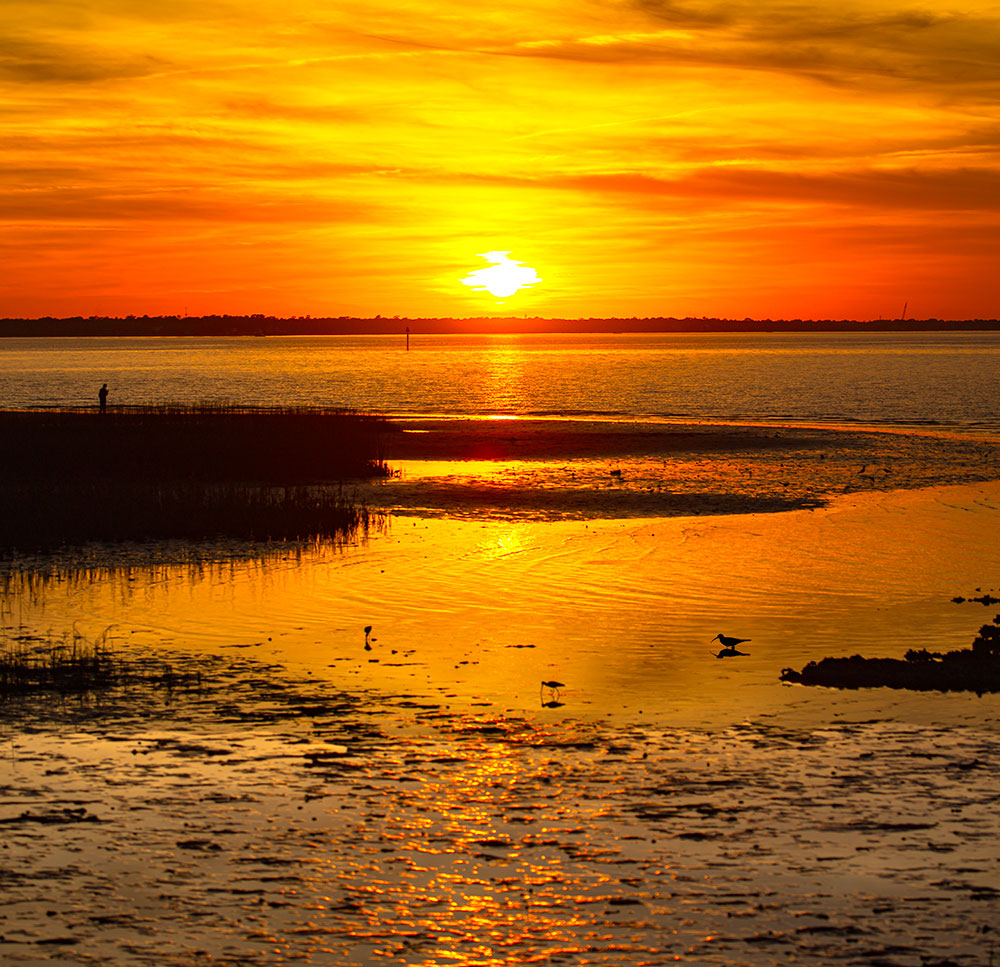
Charleston Harbor Sunset — Pitt Street Bridge Recreation Area, Mt. Pleasant, South Carolina
It comes down to and flows from us and our intuition
rising to meet each situation as it arises,
here, now and moment-to-moment, day-to-day, in the world.

That is all we have and all we need
to see/hear/know/do what needs to be done
and be who we need to be
through all that comes our way.

And we have emptiness/stillness/silence
(One thing, not three)
to rely upon and return to
in order to refuel, refresh and redirect
here, now all the way.

When we take the time to know what we know,
we know what's what and what is called for
in order to do what needs to be done,
when, where and how it needs to be done,
in aligning ourselves with the flow of life and being
throughout what remains of the time left for living.

Which is all that can be asked of any of us,
any time, any place.
Neither the Buddha nor Jesus could do more.
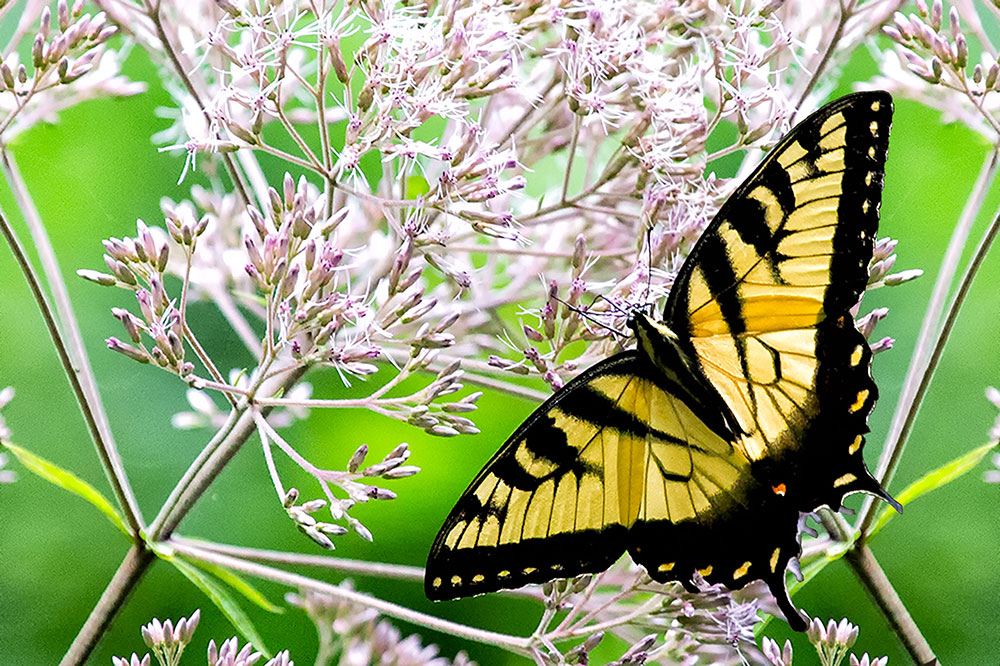
Yellow Swallowtail Butterfly — The Bog Garden, Greensboro, North Carolina
Projection and denial
are two of the psychological
defense mechanisms that are most
responsible for things being as they are.

It is a solid irony.
Things are as they are
because projection and denial
prevent us from seeing things as they are.

If we knew what's what
without projecting onto it
what we fear and what we wish,
what we dread and what we desire,
we would be much better positioned to
deal with what faces us
and do about it what needs to be done about it.

Or maybe not.

"What needs to be done about it"
depends upon our orientation and intentions.

There is "What needs to be done about it"
from the standpoint of the situation as a whole.

And there is "What needs to be done about it"
from the standpoint of our self-interest,
ambition, desire, fear, dread and what it means for us personally.

If we look at the world selfishly,
in terms of our perceived best interest,
we strive for a certain outcome.

If we look at the world from the standpoint of
benevolence, compassion and good will,
we strive for a different outcome.

What do we have at stake in what we face?
What do we stand to gain and lose?
And what part do projection and denial
play in our thinking about what we stand
to gain and lose?

The people killing democracy in this country
and in the world
know what they want
and are willing to do whatever it takes to get it.

And they aren't willing to do anything
to make the world a better place
for all people to live.
The part projection and denial play
in them being the way they are
likely aren't as great as utter selfishness and
willful indifference to the needs of others.
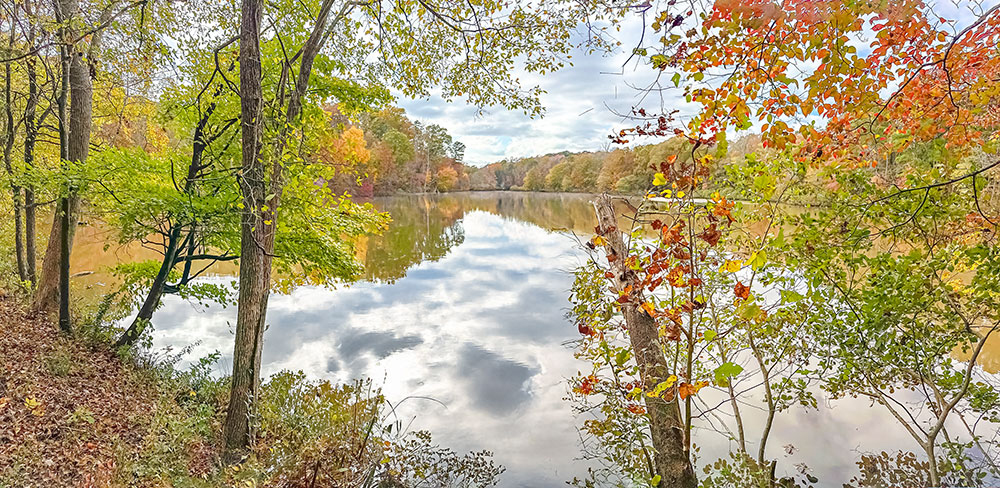
Lake Haigler — Anne Springs Close Greenway, Fort Mill, South Carolina
Being true to ourselves
is being true to our original nature,
to our innate virtues
(The things we do best and enjoy doing most),
our inherent imagination
and our intrinsic intuition.

Drop into the emptiness, stillness and silence
and reflect on where you are failing
to live truthfully engaged in these aspects of you.

Where are you saying NO
where it would be more truthfully "you"
to say YES?
And saying YES
where it would be more truthfully "you"
to say NO?

Live to get YES and NO in their right places,
and things will fall into place around that,
to the truthful expression of you
in each situation as it arises.
No one could do more!
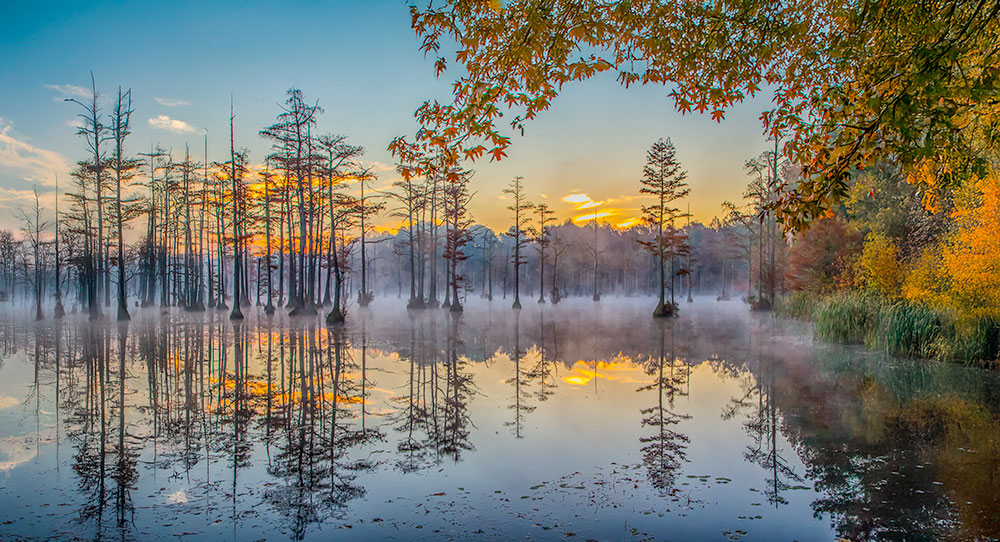
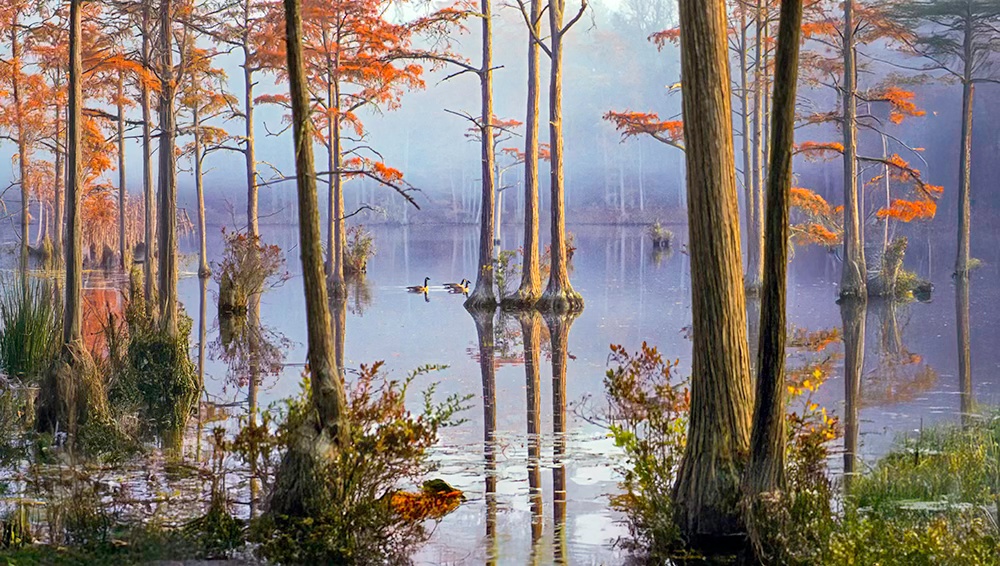
Adams Mill Pond 02 — Goodale State Park, Camden, South Carolina
We offer ourselves to each situation as it arises, arising ourselves to offer our best to the moment in a mutually arising kind of way, and letting the outcome be the outcome, without attitude or opinion, simply doing what is called for, where, when and how as only we can do it, and doing it again in the next situation as it arises, all our life long.
Emerald Lake — Yoho National Park, Field, British Columbia
What is called for, when, where and how?
Silence is always in play.
When we don't know what else to do, sit still, be quiet, wait to see what arises in the silence, what opens up, what stirs to life, what winks at us and calls our name.
We can always drop into the silence and see what meets us there.
The silence depends on nothing coming with us there. No wants. No plans. No agendas. No schemes.
We are not here to get what we want!
The Buddha said it best, 2,500, or so years ago. "Peaceful abiding, here, now."
No wants, no desire, no fear.
Just sitting still, being quiet, seeing what arises with an urgency about it, asking us to do what is called for, with our original nature, our innate virtues (The things we do best and enjoy doing most), our inherent imagination, our intrinsic intuition.
How do we need to put ourselves in play for the good of the time that is at hand? When the mud settles and the water clears, stand up and do what needs to be done!
And when it is done, drop back into the silence, waiting to see what's next.
Jesus saying, "The Father and I are one,"
and "In as much as you have done it to the least of these,
you have done it unto me."
And Paul saying, "It is no longer I who live,
but Christ who lives in me."

Sets the table for us to realize
we are one with Paul, one with Jesus, one with God,
just as we are,
as much as the Prodigal Son was at one with his father,
and his father with him.

The entire atonement, redemption, forgiveness, etc.
angle is a road best not taken,
and we need to be working on being one with ourselves
so that we might be one with each other,
Paul, Jesus, God and the entire Cosmos.

We work at being one with ourselves
by aligning ourselves with our original nature,
our innate virtues
(The things we do best and enjoy doing most),
our inherent imagination
and our intrinsic intuition.

When we are one with those things--
when we are being who we are
and serving/exhibiting/reflecting
these aspects of ourselves,
in the work of doing what is called for
in each situation as it arises,
never mind what we want,
the world changes,
and we are living in ways
that are inseparable from
what Jesus called "The kingdom of God."

This is our work to do--
consciously, mindfully, deliberately, intentionally,
day in and day out
for the rest of our life.

There is nothing about any of this
that is too hard for us,
too difficult,
impossible.

Children can do it--
and do it all of the time.
So Jesus said, "Unless you turn and become
like children, you will never enter
the Kingdom of Heaven."

Being one with themselves
is what children do best.
They all are "as one thus come,"
which is to say, being themselves,
being who they are,
being Paul, being Jesus, being God,
showing us how to do it,
only we have eyes on other things.
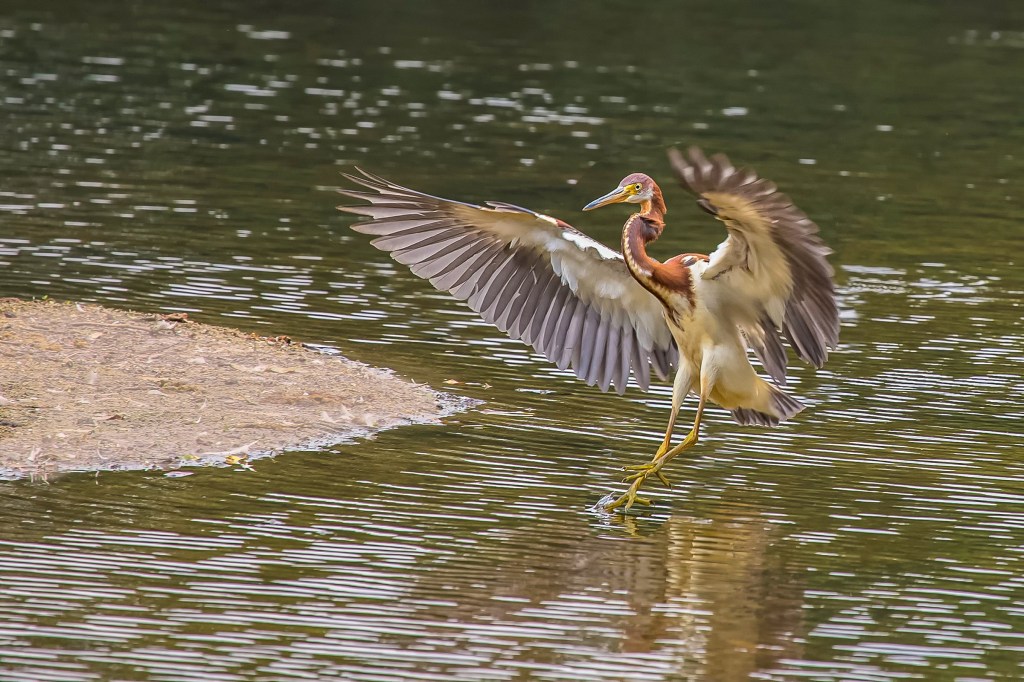
Tri-colored Heron — The Bog Garden, Greensboro, North Carolina
Jesus followed the prophetic prototype in presenting himself as a reformer come to reverse, revise, renew the drift of religion of the day with his "You have heard it said, but I say unto you," and his challenges to established authority from his youth.
His Parable of the Prodigal Son is a direct refutation of the Garden of Eden tradition and the idea that sin has to be redeemed and atoned for.
The son does not have to earn or deserve his father's forgiveness, and Jesus makes a point of dismissing littanies of confession and repentance via the father's declaration, "That has no place here, for once you were lost but now are found, you were dead, but now you are alive!"
How vastly different are the images of St. Peter at the Gate of Heaven, reading our sins from the book of life and weighing our virtues against our transgressions before allowing us into eternal life or sending us into eternal damnation!
Jesus was at odds with the religion of his day, denouncing everything about it, culminating with turning over the tables of the money changers in the courtyard of the Temple, incurring the wrath of Joseph ben Caiaphas, the Chief Priest, and a collaborator with Pontus Pilate working together to maintain the peace of Jerusalem.
It was Caaphas who said, speaking of Jesus, following the disruption at the temple, "It is better that one man die for the people than that the whole nation perish."
And setting in motion the crucifixion of Jesus As punishment for Jesus' opposition to the way of religion as it was being lived in Palestine around 2,000 years ago.
That Jesus died for the sins of the world, inherited from Adam and Eve, was an idea circulated at the time by opportunists who saw it as a way of creating wealth and power for their own aggrandizement via the churches of Constantanople and Rome and others, with the able assistance of Irenaeus, the Bishop (and the Butcher) of Lyons, who led the persecution of heretics, particularly Gnostics in the second century.
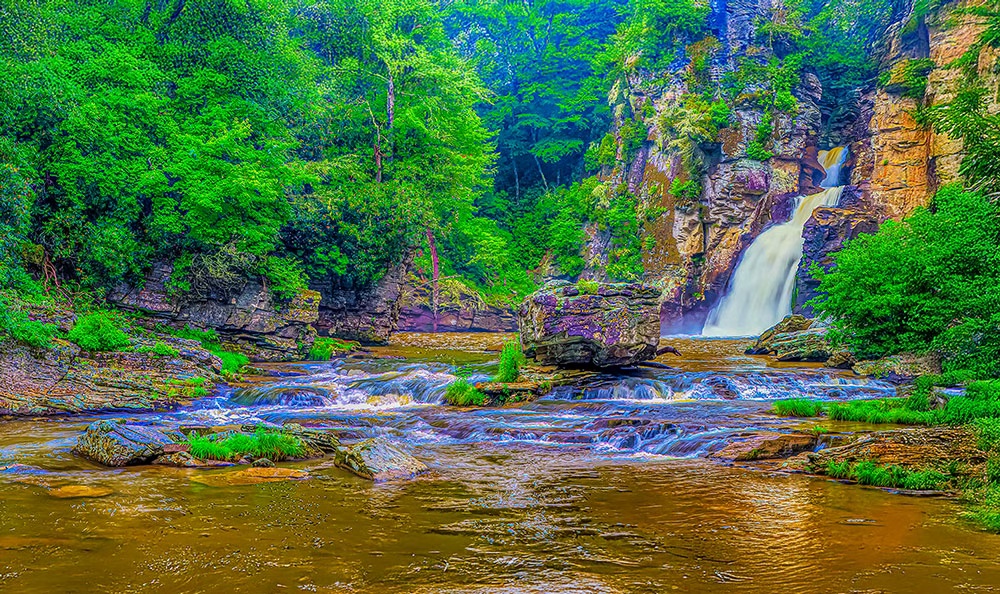
Linville Falls Panorama — Blue Ridge Parkway, Linville Falls, North Carolina
Doing what is called for, being what is called for, in each situation as it arises, with no concern for what is in it for us, is being Jesus and Buddha.
That is what they did.
It is what all of us do when we know what we are doing-- doing what is called for where/when/how it is called for.
That is all there is to it.
And it comes to us as an undeniable urgency in the emptiness/stillness/silence as a gift from our intuition.
There is nothing to believe. There is only seeing/hearing/ knowing/doing/being-- what is called for.
Everybody is quite capable of doing that much. Situation by situation. All our life long.
If you want to be lucky
have no desire or expectation,
but trust yourself to what the day brings
with the openness of joyful presence,
delighted with everything that comes its way,
like a child filled with wonder,
or a dog looking forward to another walk
around the same block.

Knowing something is coming
and excited to see
what you will do with it.