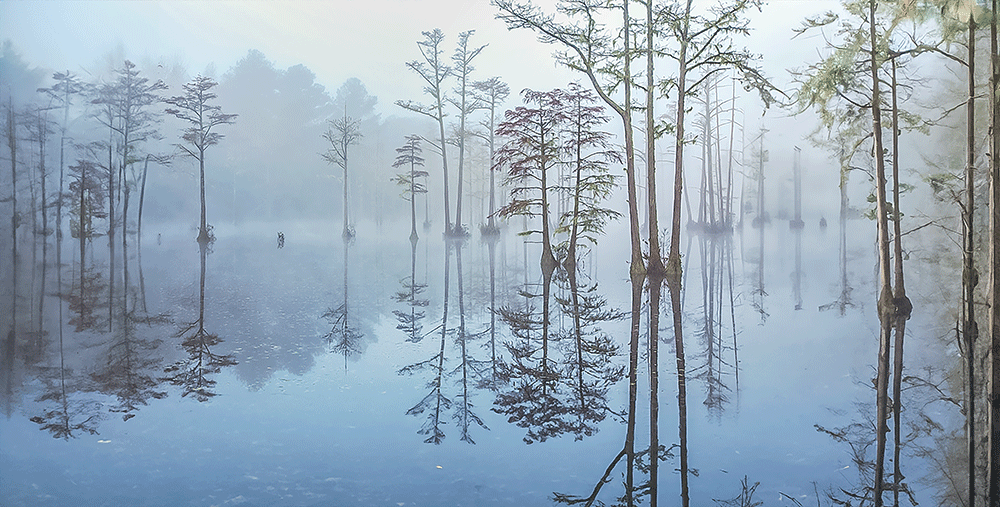
We do not see
what we cannot articulate.
Articulation is the hidden source of seeing.
Taking up the work of saying
what needs to be said
is also the work of seeing
what needs to be seen.
The less we have to say,
the less we are capable of seeing.

Where photography is concerned,
the scenes that speak to us,
speak to many of us,
maybe most of us.

What is it there
that isn't everywhere?
Why some scenes and not others?
Why some scenes for some people,
other scenes for other people,
and other scenes for no one at all?

I ask as "the moved" in response to "the mover."

What moves us to awe, rapture, wonder?
The old Taoists might answer,
"The Tao that can be said is not the eternal Tao."

What ever it is,
we know it when we see it,
even if we cannot say what it is.

Our work as photographers
is to show what can be seen even if
we cannot say what it is.
To be "transparent to transcendence,"
and allow our silence to express
our highest honor and deepest admiration.

And whether we are photographers or not,
our struggle is to say what needs to be said
and trust that to enable us to see
what needs to be seen--
always aware that we cannot say
what cannot be said,
so we talk about "transcendence,"
for instance,
without saying anything about "The Transcendent."

We owe it to ourselves to say as much as we can
about what can be said,
and to "talk without ceasing"
until we see at last what we have been
trying to say all this time.
–0–
 Jim Dollar's Photography and Philosophy
“Trees in water/trees in grey silence” just doesn’t cut it the way your photograph does.
Get Outlook for iOShttps://aka.ms/o0ukef ________________________________
LikeLiked by 1 person