03

All religion is based
on the premature interpretation
of experience.

The discovery of recurring cycles
in the relationships
between the stars and planets--
with mathematical regularity--
did not,
does not,
mean anything beyond what it is.

However, the stargazers who put
everything together
made it mean what they
said it meant
by interpreting it the way they did.

We should leave things we don't know
anything about uninterpreted
until we know better what is going on.

This is the difference between
science and religion.
Science calls its interpretations
"hypotheses."
Religion calls its interpretations
"facts"
(Everything religion "takes on faith"
becomes a fact the instant
it is so taken).

Joseph Campbell said,
"The whole point of science
is that there are no facts,
only theories."

No religion,
or spokesperson for religion,
would say that about religion.
–0–
02
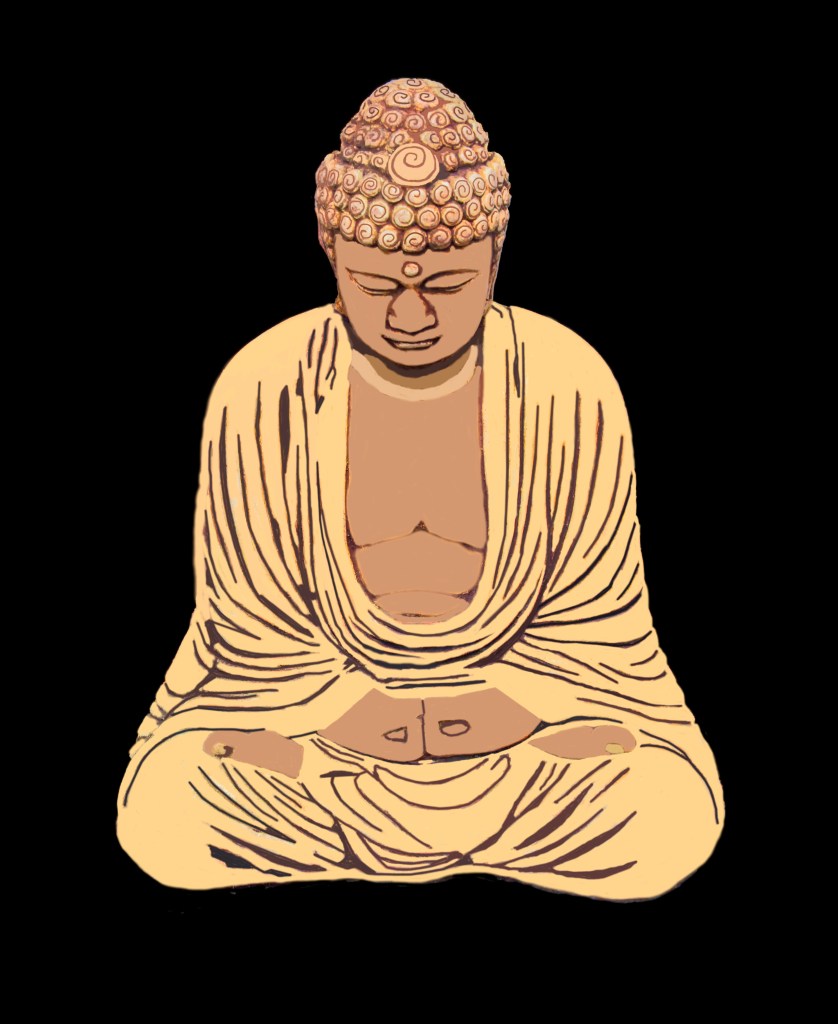
The Hero's Journey is a meaningful life.

A meaningful life is the first thing to go.
Our eye is on the prize,
and the old Zen maxim always applies:
"The ability of the archer to hit the bullseye
varies in inverse proportion
to the size of the prize for doing so."

A meaningful life is the bullseye.

But, we go for the money every time.
–0–
01

Is it better to win or to lose?
To be tall or to be short?
To live with a plan or to live without a plan?
And ten thousand other questions like these.

Who is smart enough to know
what is better in a general,
vague,
absolute kind of way?

Better depends upon the situation at hand.
Better is clear in the here and now.
In the far from now,
there is no telling.

What is to our advantage
changes with time and place.
Every asset is simultaneously a liability,
and every liability is an asset,
depending upon a combination of factors
that are time and place dependent.

We are built to rise to meet
every occasion.
We are ideally suited
for the life that is ours to live.
The life that is ours to live
is a perfect fit
for what we bring to the table.

When we start messing with things
with an eye on perfection,
we mess things up royally
for ever one.

This is the moral of the Garden of Eden.
The moral of the Garden of Gethsemane
is "Thy will, not mine, be done,"
with the "Thy" being the Tao of time and place
situation and circumstance,
and consisting of what is being called for
here and now.

If you like something,
it is likely to change in time.
And, if you don't like something,
that, too, stands a good chance of changing.

Forget what you want and don't want,
like and don't like.
Step into your life without opinion
or expectation,
judgment or demands.

Trust yourself to the developing situation,
and be whom the situation can trust
to do what is right
at the right time
in the right place
in the right way.

Things have a way of turning out
as blessing and grace
just by doing what is right
one situation at a time,
as though something
knew what it was doing.
 Jim Dollar's Photography and Philosophy