Finding our way to The Way one situation at a time. I don't know how great it will be, but I expect it will be interesting, and I look forward to it going on past all reason because wonder is just that way. Are you coming or not?
Yesterday, here, I put to rest the doctrine of Original Sin and the need for the Substitutionary Theory of the Atonement, or any need for atonement as a way of helping God get over the sin of Adam and Eve in the Garden of Eden, which never existed at any time anywhere in the history of the planet Earth. If you missed yesterday’s post, look it up. It will be worth your time.
I’m moving on today to get rid of the need for any kind of atonement entirely. It is absolutely absurd to posit God as angry with us to the point of sending us to hell for violating any and all supposed covenants between humanity and God as though we owe God eternal and everlasting allegiance and obedience or it is hell to pay.
I present my case by calling up two witnesses for the prosecution, Jesus and the father of the Prodigal Son. In telling the parable of the prodigal son, Jesus was eradicating all references to Eden as the cause of God’s dissatisfaction with humanity and God’s justification for sending any of us to hell. Jesus was saying, about the Prodigal’s father, “THIS is how it is with God! For now and evermore!”
In two days here I have dispensed with Original Sin and any need of Atonement, Redemption, Forgiveness, which constitute the foundation of Christianity, and have laid the foundation of a completely different and viable approach to living with an understanding of the spiritual foundation of existence that will be an ever-present renewal of our life and spirit in dealing successfully with the ebbs and flows of existence in each situation as it arises from now throughout what remains of time. And I look forward to sharing as much of that time as possible with each of you, beginning now!
No one can sin for another, or atone for another’s sin.
Psalms 49:7 — No one can redeem the life of another, or give to God a ransom for them.
Deuteronomy 24:16 — Parents are not to be put to death for their children’s (sin), nor children put to death for their parents’ (sin)– each will die for their own sin.
Ezekiel 18:20 — The one who sins is the one who will die. The child will not share the guilt of the parent, nor will the parent share the guilt or the child. The righteousness of the righteous will be credited to them, and the wickedness of the wicked will be charged against them.
These three Old Testament texts disappear the Doctrine of Original Sin and the Substitutionary Theory of the Atonement, and the need for atonement, redemption, forgiveness and the sacrificial death of Jesus on the cross. Just like that, Christianity is disappeared from the League of World Religions. Good riddance, I say. It was ridiculous from the start.
Disappearing Christianity opens the way to flipping Christianity into a new version of its old self just by re-imagining all of its doctrines and its theology and transforming its offerings from “How to Avoid Hell and Get To Heaven When You Die,” to “How to Live a Life Devoted to Being True to Ourselves in Doing What Is Called for Here, Now, The Way It Needs To Be Done Forever!” Changing out the hymns will be the biggest problem–and a great opportunity for song writers and musicians.
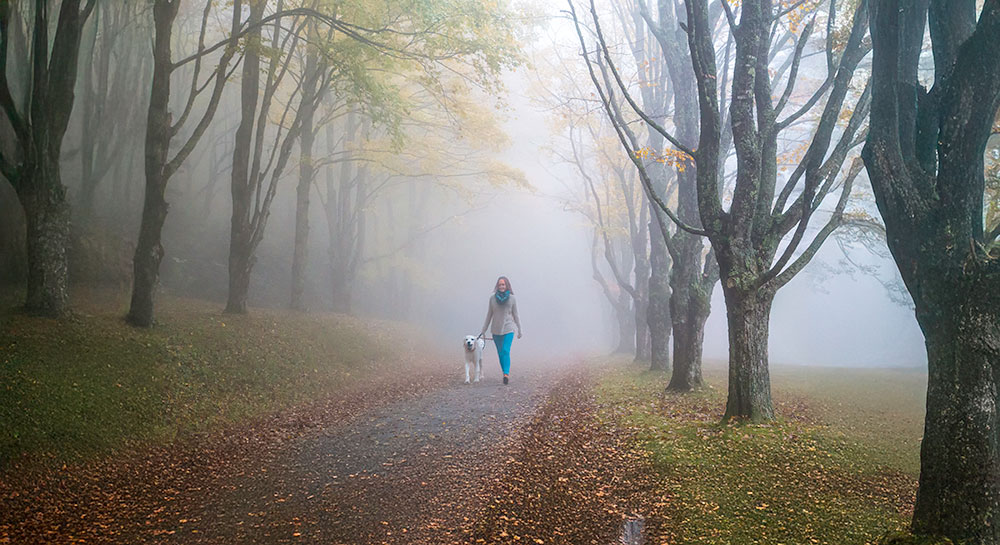
Out of the Fog— Bass Lake — Moses H. Cone Memorial Park, Blowing Rock, North Carolina
Liz Sisson died when she was 16 in a nighttime single car crash that two of her friends walked away from. Eddie Stanton died when he was 28 in a private airplane crash because the plane was overweighted and didn’t make it over the trees at the end of the runway. Several of his fellow passengers walked away from that scene. Eddie was a childhood friend of mine in Itta Bena, Mississippi. Liz was the daughter of members of my congregation in Amory, Mississippi. And I grieve their loss. All of us who have survived this long, to this point, carry with us our own private Wailing Wall at which we mourn and commemorate the deaths of those who died too soon, doing our part in bearing witness to their life and the loss their death had on us, carrying their memory with us throughout our life, doing our part in not forgetting them, as they would have not forgotten us had we not been among those who walked away.
Jesus wasn’t a Christian, but he was a Gnostic. And all of his teachings came straight from his Secret Knowledge in the here, now of his time and place.
Gnosis , Psyche, Tao, Intuition–the terms all mean the same thing: Secret Knowing. Everyone who knows, who has ever known, knows the same things. Jesus spoke to the people as one who knows and told them what they had never heard, but what they all had always known without having the words to say it out loud. He said it for them, to them. And they said, “Who is this who teaches with such authority and tells us what we have always thought is so?”
What we all have always thought is so has been with us always as Gnosis, Psyche, Tao, Intuition. We have always been Gnostics like Jesus and did not realize it until here, now. And now we know we cannot deny it, and that it will be true forever. No? (141 of “200 More Zen Thoughts from Jim Dollar #1 on my WordPress Blog)
The Way of the Tao is the way of water seeking its own level, which has nothing to do with what water wants. Water doesn’t want anything. Water just does what its circumstances call for. This is the First Lesson of the Tao: What does wanting know? What is being asked of us? Here, now? What is called for? Where is the flow of our life taking us? What does that have to do with what we want? Where does wanting come from? What is the source of our wanting?
To what extent is wanting driving our boat on its path through the sea? How does our path through the sea exhibit its own drift and flow? Are we aligned with the drift and flow of our life? Or, are we engaged in a daily struggle to force our life to go where we want it to go? Who is in charge of our life?
Does our life know more about where it needs to go than we do? What are we built to do? What is our life designed to do? Are we following the Way that is natural for us? Are we imposing our way upon the Way of life that is natural for us? Who is in charge of our life? Are we aligning ourselves with our life’s drift and flow or imposing our will upon our life?
The Tao requires us to be aligning ourselves with our own drift and flow and not imposing our will on the how, when, where, what of our life. How are we doing with that? Are we here, now on the strength of our own will and desire, or through being led by the drift and flow of our life? And, if it is by way of a mixture of the two, what is the ratio of the mixture? We are here, now by virtue of our saying yes or no to the choices that brought us here. Were those yes’s and no’s the product of will and desire or of drift and flow?
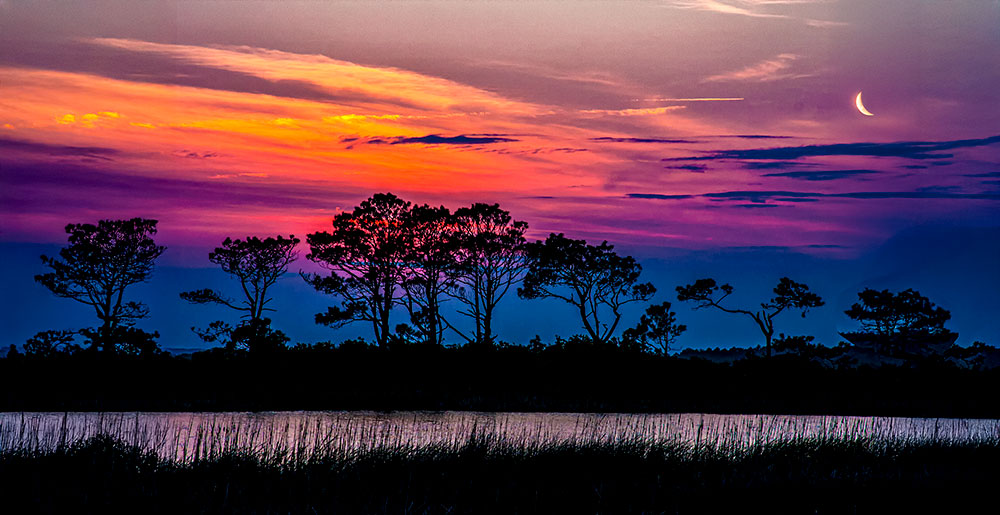
Eveningf Ferry from Swanquarter — Pamlico Sound, Ocracoke Island, Cape Hatteras National Seashore, Outer Banks, North Carolina
The middle of the road is hard to find. Extremism is everywhere. Somewhere somebody is protesting kids selling lemonade in front of their house. Opinions are fueling counter opinions. Circumstances are begetting circumstances like never before. Somebody thinks zazen cushions cause brain cancer. If you are not an activist your neighbors will march on your street tomorrow if not later today. Whence cometh the ire? All the time? Over anything? I’m protesting all the protests! I’m asking for a return to sanity! The restoration of easygoing nonchalance! Propping our feet up! Taking naps! Getting to the bottom of what the fuss is all about! Calling a six-month timeout!
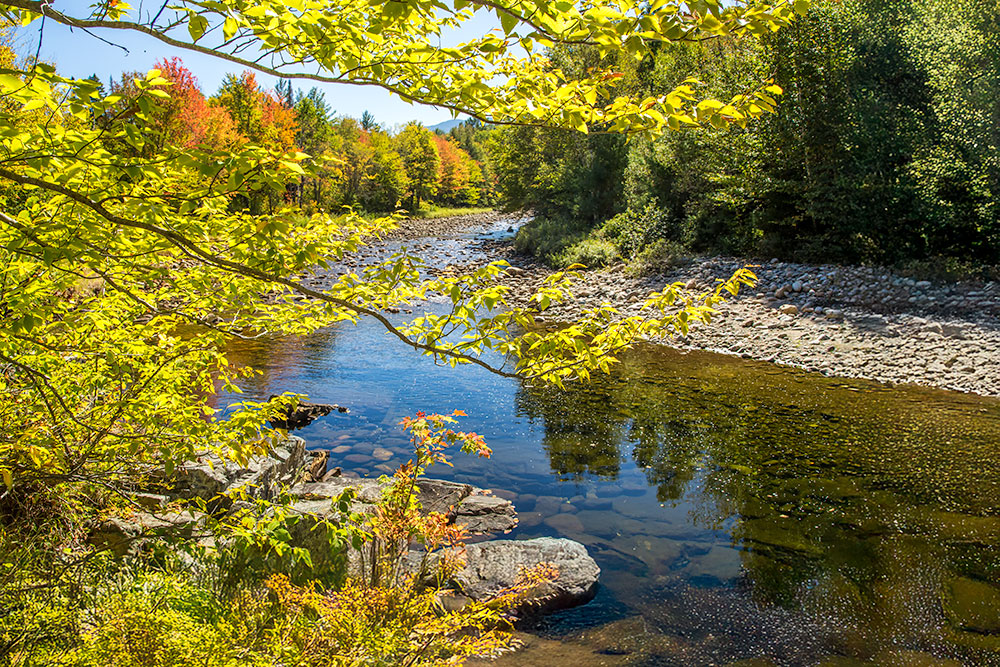
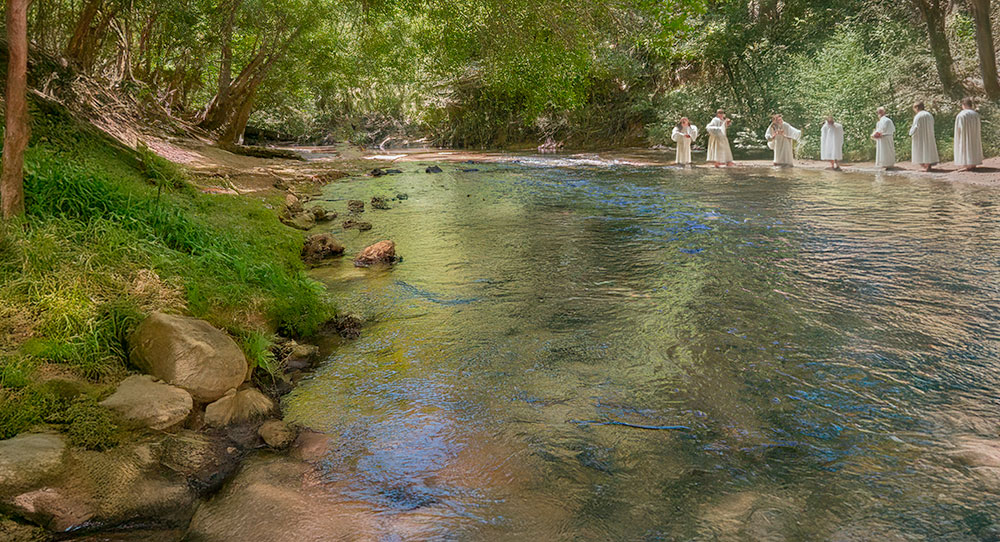
I Went Down To The River To Pray — Steele Creek, Anne Springs Close Greenway, Fort Mill, South Carolina
A Philosophy of Health by Jim Dollar
A healthy lifestyle is more than eating well and exercising. It includes how we set limits, draw lines, establish boundaries—and bear the pain of living within the within the environment of everybody else on the planet doing the same thing.
The way we live has implications for us and for all people everywhere. Implications that include complications, conflicts, contradictions, complexities, paradoxes and collisions. How we work it all out determines how healthy we are.
Basketball is played when two teams of five players each dance together for two twenty-minute halves. An individual basketball player goes through spans of time when they are on-and-off, dancing-and-not-dancing, in the flow of the game, in sync with their team members, doing what needs to be done in each moment of the game, moment-by-moment-by-moment, and then, “like that,” being not in the flow, not in sync, not doing what needs to be done. Back and forth, in-and-out, here-and-now and not-here-not-now. For two twenty-minute halves.
How each player responds personally to the in-and-out nature of their “game,” and how the other team members respond to the player-and to their own in-and-out-ness—has implications (complications, conflicts, contradictions, complexities, paradoxes, collisions) for the entire game, and for their life together off the court.
If a player gets angry/frustrated with being off their “game” and tries to force their “game” to be at its best all of the time, their “game” deteriorates even further, and spills over into the “game” of the other players, so that the entire team gets out of sync, out of rhythm, out of “the grove,” out of “the flow,” and it becomes quite a mess in a very short period of time.
The key is recognizing what is going on, understanding the nature of “flow,” being patient with the process, and waiting for their individual “game” to come back of its own accord. The tide ebbs and flows and turns around. The rhythm of a basketball game, of life, of the universe, is always in flux. It is always coming in, or going out, or turning around. We do not control the coming, or the going, or the turning. We participate with awareness in what is happening-or not—but we do not determine what is happening. While we are not in control of what is happening, we can be in command of how we respond to it, of what we do about it, of how we live in relationship with it. And our best choice about what to do in response to what is happening in each moment is to keep playing with awareness of what is going on, moment-by-moment, and let the game come and go as it will.
This is called “Being in the game without being in control of the game.” Can we play without being in control? Can we play “just seeing, just knowing, just doing”-without opinions or judgment? Without evaluating our performance? Just being aware of our performance without trying to force it to be anything more than it is? Just being intently, and intentionally, aware of the game and our place in it without emotional reaction/response? Without trying to control what cannot be controlled? Without trying to force what cannot be forced? Responding spontaneously to the unfolding of the moment without interfering with what is happening, and what needs to happen in response?
“That” means “this,” period. “This” is required in response to “that.” If we make a bad decision, that is just “that,” and what needs to happen in response to it is what we need to do, without opinion, judgment, evaluation, condemnation, etc., about “that.” We do what is called for here, now, without spending any time dwelling on what we want or don’t want. “That” just means “this.” No more, no less. “That” flows into “this.” And we flow with it, in command of our response, and not in control of what is happening, and not bothered by being not in control—with no attachment to, or investment in, the outcome, only with the process, with being who we are needed to be in the situation as it arises, moment-by-moment-by-moment. Doing what is called for and needs to be done about it, when, where and how it needs to be done. And dealing with what interferes with that, simply by being aware of it, and letting nature take its course.
As players, we have to be patient with this process and wait for our “game” to come back on its own. This enables our “game” to be what it can be in every game, all of the time. The key to being able to do this throughout the game, and throughout our life, is bearing well the pain/anxiety/fear/frustration of not being in control. Not being in control is the source of our pain. How well we square up to that, and deal with it, tells the tale we are living out “in each situation as it arises.”
How well we do that depends upon how often we enter the silence, how much time we spend there and how well we meet what meets us there.
Everything comes up in the silence. Silence borne well is the way of health. Silence borne poorly is the way of dis-ease. We have to be easy with the silence. We have to know what to do with the silence—how to listen to the silence, and bear well what we encounter there.
In the silence, and out of it, we have to ask the questions that beg to be asked, and say the things that cry out to be said, and hear the things that need to be heard, and see the things that need to be seen, and wait in the silence for the way to emerge, appear, arise, occur to us.
We can drop into the silence anywhere, everywhere. In the middle of a basketball game—in the stands or on the court. We can open ourselves to the silence wherever we are, and wait while we are eating popcorn or dribbling toward the basket.
We do not think our way to solutions to our situation, we wait for them to spontaneously appear. This is not good for the economy, of course. The economy, and the culture, are based on providing us with means of coping with situations beyond control—an economy/culture founded on symptoms and illness, sickness and death. The silence teaches us that we do not need what the economy/culture want us to have, but can find what we need simply by being open to the silence and bearing the pain of waiting for what needs to be done here, now to become apparent— and it may not be what we think it is, or should be.
The economy—the entire culture-depends on us sleepwalking through our life, never opening our eyes, never being aware of what is plain to see, just following the cow in front of us from the barn, to the pasture and back to the barn. The economy/culture is grounded, based, on illness, sickness, dis-ease. The economy/culture depends upon us to be endlessly wanting to feel better, but never getting better, certainly not getting/being well!
We are fighting for our life against an economy/culture that both sustains and enables our life, and is killing us by keeping us only alive-enough to sustain and enable the economy/culture. The culture does not want us bearing our pain! The economy/culture is a monstrous pain management system. It enables us to live via diversion, distraction, denial through various forms of entertainment, sex, drugs (“medications”), alcohol, money and all of the “positive” addictions, which are, nevertheless, still addictions, keeping us in the eternal cycle of pain-and-escape-from-pain.
Health is freedom from addictions. Freedom from escapes. Freedom from denial. Health is facing straight-on, straight-up, what needs to be faced, and doing what needs to be done about it in each situation as it arises. In any situation, there is what is called for and what is not called for. Healthy people do what is called for, when it is called for, where it is called for, how it is called for, for as long as it is called for. That is the path of good health.
One of the key principles of good health is this: “When things come up, we respond in ways appropriate to the occasion.” Acting in accordance with what needs to be done in each situation as it arises is the basis of good health. To live like this is to be in the flow, in the groove, on the path, on the beam, at one with the good of the moment, moment-by-moment-by-moment. And it is the fundamental ingredient in Integrity.
There is no steady state of being. Health and Integrity, harmony and discord, vary with the tides and the movement of the spheres. We are in flux, moving into and out of relationship with ourselves and with the situations of our life. Our mind is in motion, carrying us toward, and away from, the best interest of life and being. We are not in control of the elements that make up our life.
It is as though we are playing two twenty minute halves of basketball. How well we do that depends on how awake we are, and how much our awareness of each moment, here and now, guides us in living in response to what is happening then and there. The quality of our health is an indicator of where we need to get to work in being aware of what is going on, and being aware of what to do about it—and doing it, when, where and how it needs to be done in each here/now that ones our way.
It is as though we are playing two twenty minute halves of basketball. How well we do that depends on how awake we are, and how much our awareness of each moment, here and now, guides us in living in response to what is happening then and there. The quality of our health is an indicator
Gnosis/Psyche/Tao constitute the base/foundation of the Self. Of each of us. Of everyone. Of life itself. We can think our way to the base/foundation of the Self, of ourselves, and that’s as far as we can go. There are no words for anything beyond that. No vocabulary. And we can barely experience what we cannot say. It is a gray zone for me, or maybe it is grey. I don’t know where that line lies. It’s like the line between Gnosis/Psyche/Tao. I can’t find it because I can’t say what it is.
We can call it Gnosis/Psyche/Tao/Gray/Grey and that is as far as we can go. Beyond that, there is only sitting and wondering, waiting, for what arises in the silence. And something always arises in the silence. We can count on that. Being quiet enough long enough brings things to life. Something arises, emerges, appears, occurs and we see where that goes. And we cannot force it to go where we want it to go. The things that arise in the silence have their own purpose/goal/direction. We are not in charge of ourselves. We are here to observe, reflect, realize and to follow our realizations wherever they take us. We do not direct the show. We serve our realizations, and see where it goes. (This is #122 of 200 More Zen Thoughts From Jim Dollar #1).
Lake Haigler Mirror — Anne Springs Close Greenway,Fort Mill, South Carolina
What is money for? How much money is enough? After that, what? What keeps us going? Why? For what? Why do we keep going? For me, it is to see what’s next. To see what happens. To see what is called for. To see what I do about it. I am the mystery I keep getting to the bottom of. There is no bottom. There is always something else, something more, that I am interested in. My interests never end. Curiosity is my driving force. What is yours?
Boredom is nonexistent for some people. The swamis and the gurus can’t get enough of sitting. Some say “AAAAUUUUUMMMM,” some just sit. And never get bored. And they don’t get paid by the hour. What keeps them going? They just go. Why? Why doesn’t matter. They sit because sitting is what they do. What do we do because sitting is what we do? I ask questions. And ask questions of the questions. And every answer raises more questions. It’s what I do. I don’t care why.
What do you do without caring why? What absorbs you? Feeds you? Intrigues you? Keeps you going? When you get to the bottom of you, what is there? It’s a question mark for me. And a keyboard. And a camera. I don’t know why. I just know. Why doesn’t matter. What is it for me. He said, laughing.
I’m Jim Dollar and I’m here to help people find their life and live it in a “Who am I and what am I about?” kind of way. I spent 40.5 years as a minister in the Presbyterian Church U.S.A., serving congregations in Louisiana, Mississippi and North Carolina, and picking up pointers along the way. When I retired in February, 2011, I took a personal oath of silence and solitude, and have no social connections at all beyond time spent with our three daughters, five granddaughters, two great grand children and their families. All. of whom share the same zip code with is. And I still find time for reading and writing and pursuing my interests.
My primary interest is in devoting my time to my intuition, which I think of as my inner Knower, and refer to as my Gnostic (From the Greek word Gnosis for knowing, knowledge, particularly about spiritual mysteries) Partner, and also as Psyche/Tao because I don’t know where the line lies between Psyche and Tao, and I think they are the same source of knowing as “Gnosis,” “Gnostic,” “Intuition” are. Developing our relationship with our spiritual guide within is the best thing we can do in the service of finding our life and living it.
This has nothing to do, with theology or Christian Doctrine, or Christianity, or religion, and all of those things get in the way of living aligned with, in full accord with, Tao, Psyche, Gnosis, our Gnostic Partner, our Knower Within. And it also has nothing to do with what we want to do and everything to do with what we must do, have to do, have no choice but to do, in the sense of being gripped by a compelling force directing us toward This and away from That, That, and That over there.
And also has nothing to do with thinking/desiring and everything to do with Knowing-Doing, Being.
I don’t recall how many times, but more than two or three, when in the ministry I would be walking with people through a divorce and they would say to me, “I knew it wasn’t going to work from the start.” That is the kind of knowing I am talking about flowing from Tao, Psyche, Gnosis, our Gnostic Partner, our Knower within. And “flowing” is the term of choice because being at one with Tao, etc. is being in the flow of life and being, at one with what is called for here, now and living in light of it no matter what. It is what Jesus was talking about when he said in Gethsemane, “Thy will, not mine, be done.”
And it is the way, the truth, and the life, and the path to “having life and having it abundantly,” though we may not be rich or even well-to-do. But we will have lived the life that is ours to live and done what is ours to do, and we can’t buy that with silver and gold.
Our “Gnostic within” is our intuitive inner guide that first appeared as Gnosticism, “secret, inner knowing” following Jesus’ execution in the first century CE. Intuition has been with us always but was taken to be “the voice of God” early on. Plato (428-348 BCE) and others after him up to Carl Jung, and others after him are responsible for our understanding “the voice of God within” is a part of our own psychic makeup, the “how” of which has yet to be nailed down. Yet inner knowing is an experience common to us all, and giving it a central place in our process of deciding, choosing, doing provides us with an inner voice to confer with in making our way through the world. Developing our relationship with our inner Knower, whether we think of her as our Gnostic within or as Psyche/Tao, is an aid in finding guidance/direction on our path through the sea, and one we would do well to cultivate in knowing what’s what and what’s called for here, now, day to day.
There is what we control and what we do not control. Adjusting ourselves to the things we do not control is the most important trick in the entire Book of Tricks. How well we do that tells the tale.
There is how things are and how we think about how things are, the way we see how things are, what we tell ourselves about how things are, what we do about how things are.
The way we interpret and respond to the way things are in our life determines, or at least strongly influences how we respond to the way things are in our life. We are in control of our reactivity to our life, and the way we react/respond to our life IS our life. We control our life in so far as we control the way we react/respond to our life. We determine, or strongly influence, what happens to us by the way we react/respond to what happens to us.
We hold the cards. How we play them is entirely up to us.
We can start with observing the ways we are impacted by the things that happen in our life. How personally do we take what goes on? How do we carry ourselves in response to the truth of what’s what, moment to moment, day to day? How much distance is there between us and what happens to us? Just observing the distance increases the distance, influences the way we react to what happens to us. What do we say about what happens to us? Observing what happens and observing our initial comments regarding what happens removes us ever so slightly from what happens. We can increase the distance by changing what we say about what happens. We are reflecting on our response, and that alters our response, and that puts is in more control of our response, of our life. And that begins to transform our life, just by paying attention to what’s what here, now.





 Jim Dollar's Photography and Philosophy