Finding our way to The Way one situation at a time. I don't know how great it will be, but I expect it will be interesting, and I look forward to it going on past all reason because wonder is just that way. Are you coming or not?
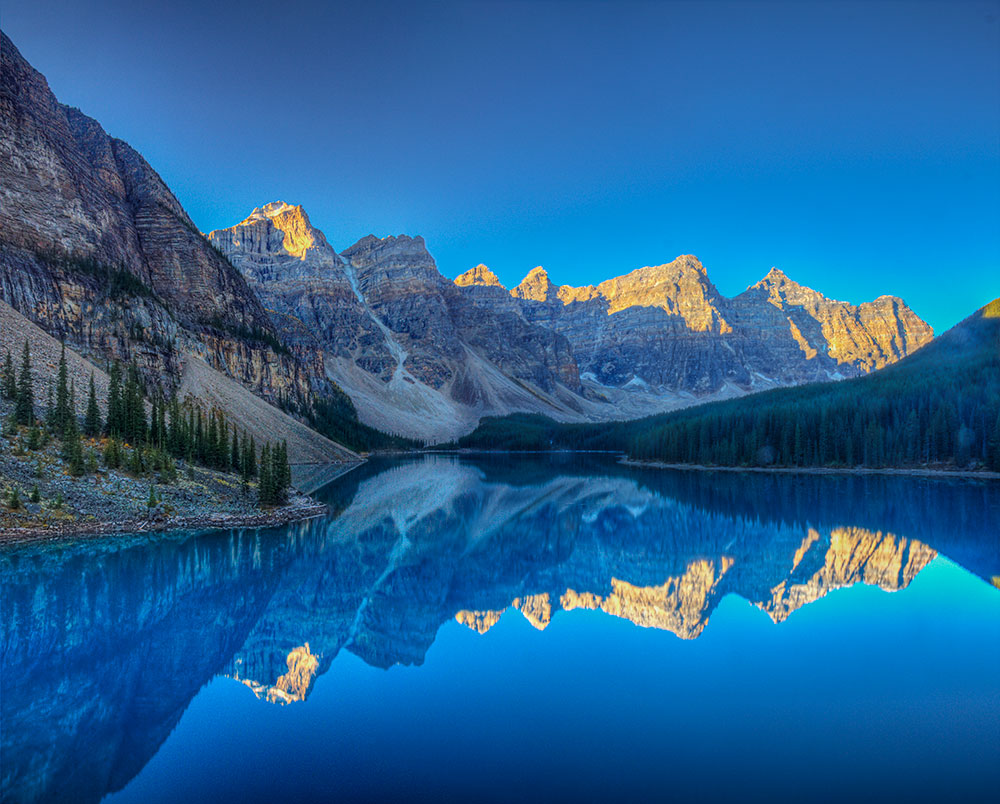
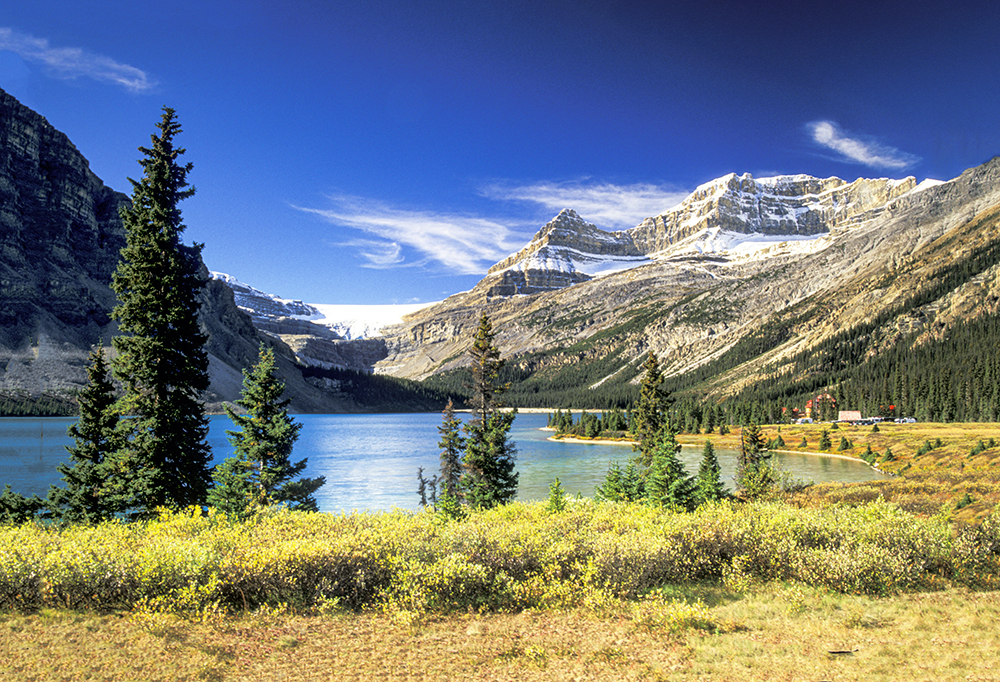
Early Morning at Moraine Lake— Canadian Rockies, Banff National Park, Alberta
I Googled it.
There have been 267 popes in 20 centuries. That is about 40 popes per century.
There were 4 centuries when the Church of Rome (and the other Orthodox Christian Churches which were in the background) was basically calling the shots for 400 years about what was Orthodox Christianity and what was not.
What should the Bible say? That’s what they were saying for 400 years.
I’m saying the Popes of Rome had 400 years to compose a Bible that gave the Church a solid financial foundation for its future.
“You are going to go to hell, You SINNERS, if you don’t do it like WE say do it!” Can’t beat that for the most solid of foundations, if you’re the Church, no?
That has been the message of the church forever. Based on the Bible the Church of Rome created in 400 years. The Reformation stopped too soon!
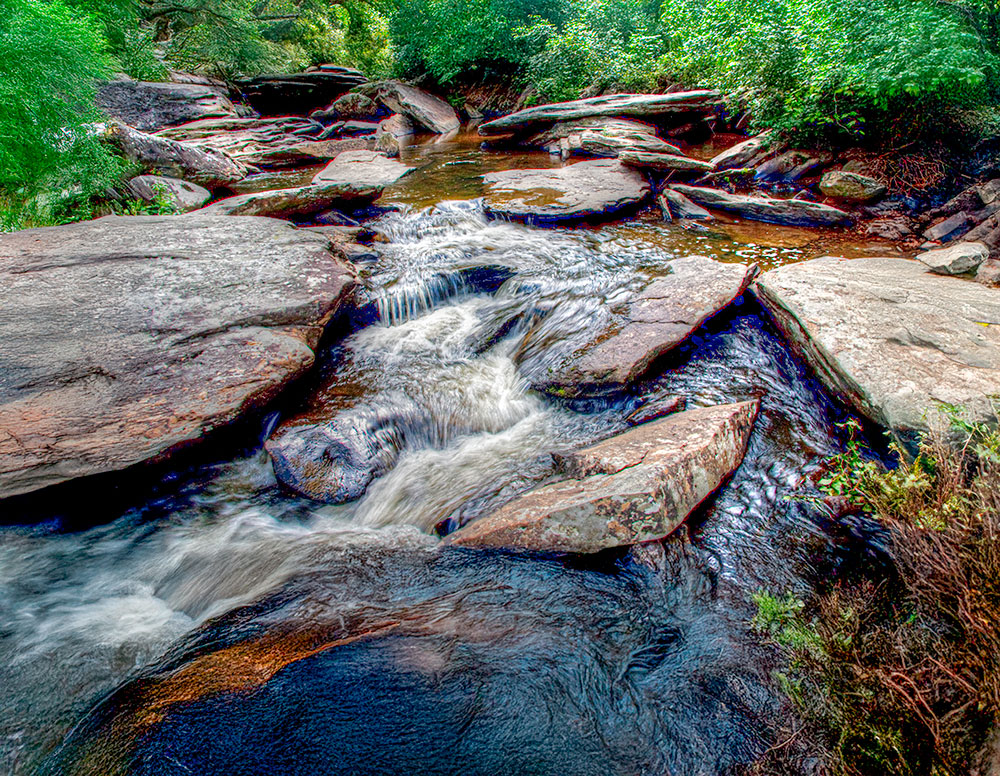
Boone Fork 1 at Gethsemane Gardens on the Blue Ridge Parkway, Blowing Rock, North Carolina
We take the wrong things too seriously, no?
It is one of the hardest things, living in ways appropriate to the occasion.

I think that means we are in too much of a hurry too much of the time.

We jump to conclusions and rush to judgment and fail to take our time some more again every day. Or, is it only me? That's a good one--It's never me. I'm late to every party and slower than refrigerated syrup.

But, I am doing better with the things I take seriously, reducing their number and laughing at the very idea of them being somehow important.

There is much to laugh about these days, and for one who has no more power and control, or even influence, than I do, laughter is my only way of discounting the horrors of the day and being somewhat balanced and in the flow, such as it is, each day. And that much is something, at least.
Boulder Beach — Acadia National Park, Bar Harbor, Maine
Signing with the Photo Agency was my most brilliant move to date
in that it forces me to relive all the old photographs. My life with the craft began in 1997, or 8, or 9.

It began with me telling my congregation in Batesville, Mississippi, "Don't send me to the Holy Land" (Which is something congregations sometimes did to their preachers)--"Send me to Yellowstone!" Which is what they did when we left Batesville for Greensboro, NC.

The trip to Yellowstone WAS a trip to the Holy Land. And opened the way to all of the other Holy Lands in the form of the National Parks, throughout my life with a camera.

Thank you Batesville!

The Natural World is the Holiest of Lands, and all we need to be healed and whole, saved and well. Just walk through nature, with or without a camera! It will restore us to ourselves, and to one another, and to all that is. Just sit for a while in nature. It will reintroduce us to ourselves. And immersing ourselves in our photographs will bring us to life again and again--what reincarnation is actually about. And what life after birth comes down to. Being with nature is all the church anyone ever needs. Which is what Jesus would say, and did say, with the lilies of the field and the birds of the air, and "the stone the builders reject."

We all are always surrounded by just what we need to wake up to who we are and what we are about, and that is all the realization, enlightenment, anyone ever needs to be who we are, and that is all anyone is ever asked to be. No?
Moraine Lake — Banff National Park, near Lake Louise, Alberta, Canadian Rockies
Reflection leads to realization. This was Joseph Campbell's Buddha impersonation. The heart, soul, foundation of enlightenment is reflection leading to realization.

Enlightenment is not a steady state of being. It is one step after another all the way to here, now.

There is no destination. There is no place to be other than here, now. Once we realize this, we are set. We are done. There is nothing beyond one realization after another.

So, we spend our life dropping into emptiness, stillness, silence, wondering, "What do you have for me here, now?" And "waiting for the mud to settle and the water to clear," in order to see, hear, know, understand, do, be some more again.

The spiritual world has a Psychic foundation. "Spiritual" is another term for "Psychic." We are spiritual to the extent/degree that we are getting to know, explore, grasp, the depth and breadth of the Psyche. Everything worth knowing is tucked away in the Psyche. Dropping into emptiness, stillness, silence is dropping into the Psyche.

We are the meeting place of physical with Psychic. We are physical becoming Psychic. We never have a need to be anywhere other than here, now with our eyes and ears open to what's what and what needs to be done in response no matter what forever.
Big Creek Fall — Great Smoky Mountains National Park, Big Creek District, Waterville, NC, Access
Our presence can be restorative, healing, uplifting, encouraging, comforting, etc. just by the way we carry, present, share ourselves with the world.

It isn't a matter of trying, but of being--without being aware of being any way at all.

"Just being ourselves," "present as one thus come," as the Buddha and Jesus did it. But this means being without guile or fear, anxiety, dread, anger, hostility, goal, purpose, intention, desire, etc.

Being available to see what we look at, to hear what is being said, to know what's what, what's happening, and what's called for in response, and doing what needs to be done here, now, with no interest or anything at stake in the outcome.

Which in itself would be remarkable and not likely to describe anyone we know.

How often do we encounter stable, balanced, serene, tranquil, harmonious presence in the people who come our way?

And why wouldn't those people be sources of health, healing and wellbeing, righting wrong and restoring calm confidence and goodwill all along their path?
This is a photograph of a postcard I took in the mid-eighties when we were living in Amory, Mississippi. Amory was built as a railroad town, halfway between Memphis and Birmingham, with a wheel house for repairs on locomotives, and it had a train flair with postcards and train fare in restaurants and shops, and this  image caught my eye. I bought the postcard and took a picture of the picture and stored it on a hard drive which I was working with yesterday and discovered this image. Which led me to search for the person to took the original picture, which led me to online train sites which I contacted with this story. I will let you know if my inquiries lead to the photographer. I think their name needs to be associated with the image, and hope to be able to do that. It perfectly captures my idea of how a steam locomotive needs to be pictured for posterity.

The Mississippian 77, and its companion locomotive, The Mississippian 76, were active in the sixties. 77 ran a short route between Amory, Smithville and Fulton, Mississippi, and is probably still active as a tourist attraction somewhere in the US.
As extensions of The One,
we all are The One,
and can easily rely upon
the power of The One
to be all we need
to rise to meet
whatever comes our way
along the way.

The power of The One
resides in such things
as good luck,
curiosity,
humor,
good faith,
resiliency,
forthrightness,
perspective,
attitude,
perception,
projection,
assumption,
observation with detachment/disengagement,
emptiness-stillness-silence,
knowing where/when/how to draw lines,
set limits,
restrict unwarranted intrusions
into our space/life,
knowing where we stop and someone else starts,
knowing where we belong
and where we have no business being,
knowing what our business is and is not,
honoring all boundaries great and small,
etc.

The power of The One
is the power of knowing who we are
and what we are about,
and being who we are,
doing what we are about.

Knowing what is called for
in each situation as it arises
and doing what needs to be done about it,
when, where and how it needs to be done,
doing the right thing,
at the right time,
in the right place,
in the right way--
which is living aligned with the drift
and flow of the Tao from moment to moment
all our life long.
Moon Mirror — Price Lake, Julian Price Memorial Park, Blue Ridge Parkway, Blowing Rock, North Carolina
The church was before the Bible.

First the church then the Bible.

The Bible says what it says because that is what the church wanted it to say. And the truth needs to be known so that then we can get to the truth.

The truth is quite different from what we have been told,
because what we have been told fits quite nicely into how the church would like for things to be, but it is not how things are.

How things are begins with all of us being born with exactly what we need to know what's what and what is called for in each situation as it arises--and to live in the service of what is called for with the gifts of our original nature, our innate virtues (What we do best and what we enjoy doing most--these are two things. Sometimes we don't enjoy doing most what we do best, and both what we love to do and what we do well are our gifts to the world. It is our place to develop our gifts and bring them forth in service to the world), our inherent imagination and our intrinsic intuition.

We develop our gifts by spending time routinely and regularly with emptiness, stillness and silence. We know things that the silence brings forth, without knowing how we know them, and use the word "intuitive" for the knowing that comes from with in of its own accord, "spontaneously arising," exactly when it is needed. We can practice the art of inner listening/hearing/
knowing/doing/being anywhere, everywhere, all of the time.  Self-induced trance states, like what happens when we play the drums, or the piano, or paint, or write, or etc. puts us in sync with our inner knower which has often been thought of as "The God within."

The God within is not the God of theology, and that has been very confusing throughout time. The God within has to do with knowing, and the God of theology is all about believing. And the two are very, very, different.

This came about in the early development of Christianity with its conflict with a movement called "Gnosticism." Gnostic is, let me guess, a Greek work for "knowing." And the Gnostics were people who recognized the God within as being a very valid source of help in time of trouble, and a guide, and a friend, and they felt that Jesus knew and served that God whom he called "Father", but whom the theologians said was the God of theology, "Wholly Other," etc., and things got out of hand with Gnostics talking about a different God than the theologians were talking about. The Orthodox Christians persecuted the Gnostics, reducing their numbers to a very few, while the Christian Church grew to encompass the entire world in 2,500 years.

But through all that time, the Gnostic knowledge of the God within has persisted, and continues to feed, bless, and bestow good luck upon those who reduce their wanting and attend to what is called for, what is needed, in the situation at hand, listening in the emptiness, stillness and silence for the knowledge of what's what and what is called for and what needs to be done about it here, now, in each situation as it arises--with nothing to gain from the standpoint of personal power or fortune.

The good luck they enjoy is the sort of thing that comes automatically to those who "let the force be with them" and go where they are led and do what they know/sense needs to be done, when, where and how it needs to be done, following the Tao of right doing, right being, right knowing, here, now, day to day, moment to moment, all their life long--just like Jesus did, with no theology to get in the way.
The church was before the Bible. I know that I have said that already, but it is not catching on, and it is the most outstanding bit of revelation that has ever come along, and people are like, "Okay, but that doesn't impact my life at all."
People are happy where they are. Revelation only works with people who have had it up to here with their life. So, I keep pounding away. Because that's the way I am.
First the church (That would be the Church of Rome, which became The Roman Catholic Church), then the Bible.
The church wrote the Bible, created the Bible, composed the Bible over the first 397 (Or 393, or 401--the sources are vague about this), but very adamant that the Bible was sealed against anything new getting into the Bible somewhere between 393 and 401 BCE.
Nothing new all those years.
And then I come along saying, First the CHURCH, then the BIBLE! That's new. Brand new. No one has ever said that. Ask around. You'll see!
In 397 (I'm being bold here), the Pope of the Church of Rome said, "Okay, we can live with this selection of Books in the Bible). We can make this work just fine."
And that was that. the Bible was closed off from all new ideas. From 397 to 2,500. Which comes to 2,103 years.
Same old Same old all that time.
And I'll tell you what that amounted to:
YOU ALL ARE GOING TO HELL IF YOU DON'T COME BACK HERE (to the church) NEXT WEEK AND HEAR THAT YOU ARE ALL GOING TO HELL IF YOU DON'T COME BACK HERE NEXT WEEK AND HEAR THAT YOU ARE ALL GOING TO HELL IF YOU DON'T COME BACK HERE NEXT WEEK AND HEAR...
The church--all churches--has/have been saying this for 10,9356 weeks, not counting leap years. It is all the church has to say, and the church can justify saying it very well based only on the Bible it christened in 397 BCE.
And then, Jim Dollar comes along and says, "Wait a minute! You are just making that up because it pays you so handsomely to say it because all these people are giving you their money every week for all those weeks so you will save them from hell. But the Church came first! The Church decided what the Bible would say, and the Bible says exactly what the Church wanted the Bible to say, which is to say, "Without the Church, everybody goes to hell!"
And you can see why the Church would not want that to get out.
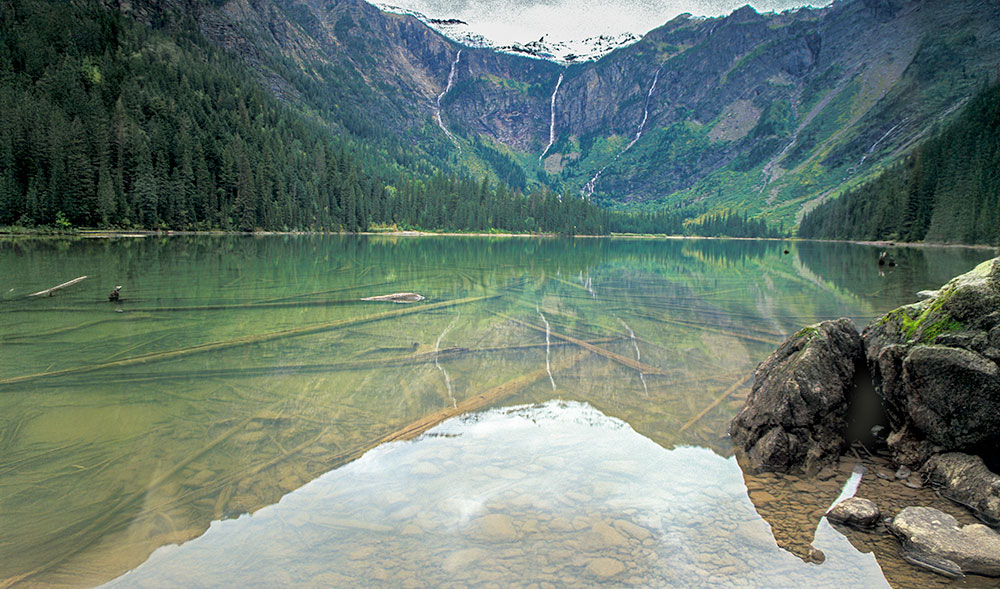
Avalanche Lake — Glacier National Park, West Glacier, Montana
Wanting and not-wanting lead the way--
and need to get out of the way so that we might know
what is called for in each situation as it arises,
and do that, where, when and how it is called for,
and let that be that until the next thing is called for, etc.

How do we know what is called for? We drop into emptiness,
stillness and silence and wait for realization to occur to us
out of our awareness of the here, now, or the present situation
as a whole.

Knowing what's what and what that implies for here, now, takes
president over wanting our way all of the time.

And knowing what's what, here now, emerges, arises, appears, occurs in and out of emptiness, stillness and silence. Enlightenment is knowing what matters most here, now, and what needs to be done about it, where, when and how.

When we pray about something, we shut up and listen for what needs to be done about it.

"Prayer" is listening/looking/hearing/seeing/knowing/doing/ being. And that is the way of life for all sentient beings. Every living thing waits for the right moment to act in the right way in the right place to do what is called for under the circumstances. That is the heartbeat of the universe.
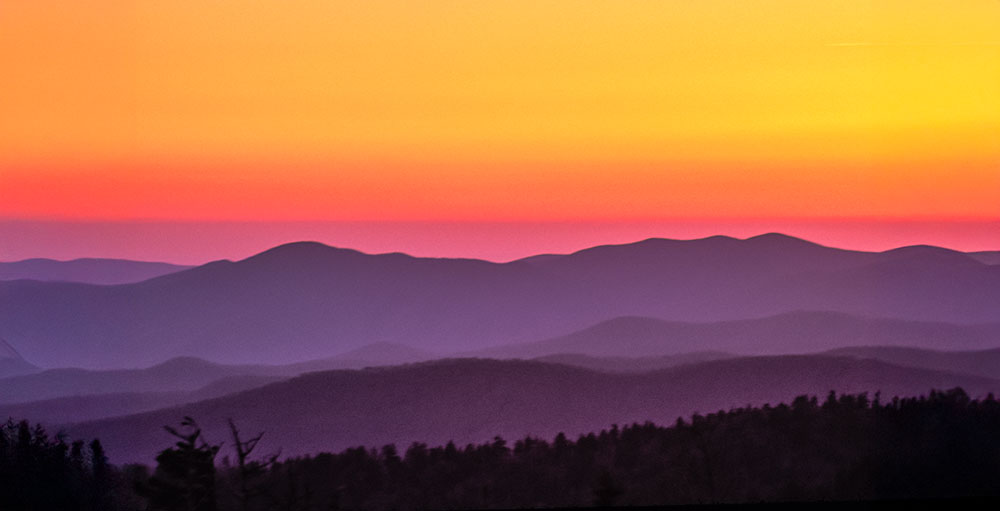
Edge of the Smokies — Great Smoky Mountains National Park, Photoshop Generative Fill AI Enhanced
The church was before the Bible.

The church was 397 years (or better, between 367 and 401) before the Bible. Exactly when is a bit murky, but clear enough to be appalling.

Let that sink in.

The church--and this would be the Church of Rome,
which became The Roman Catholic Church--
had 397 years to get the Bible "right" in the mind of the church, before "closing the canon" between 367 and 401 BCE.

So, when the church says, "the Bible says," the church is saying what the church wants the Bible to say, with a wink, wink and a nod, nod, and a quiet bow to itself for being so clever in giving itself an eternal platform for "saving sinners from the maw of hell" through all those years after making up the power of sin and the horrors of hell to the glory of God everlasting.

It's all a sham, a farce, a shame and a mockery.
And, it is here to stay because truth is an assumption that rests on "everybody saying/knowing so" over time. And, after all, what does it matter anyway?

It matters in knowing what our foundation is, in knowing what we can count on, in knowing how to orient ourselves in time and space, in putting together a life that has some heft to it, some validity about it, some sense of direction, purpose, drift and flow to stabilize it, and not something we just make up anew every day in light of what we want and feel like doing today in a "Here we are, now what?" kind of way.

What are we trying to do? Why? What is worth our time and our trouble? Who says so? How do we know they know what they are talking about? In light of what do we live? Toward what do we live? What guides our boat on its path through the sea? How good is the good we call good? What determines "right" and "wrong" in each situation as it arises? What is the measure by which we decide these things? What leads us along the way? Day by day?
A statement floating around my corner of the internet is this:
"Words are projections." That's a stunning jolt to all of our worlds. I believe it to be so because how can we get outside of our experience in order to evaluate our experience and validate what we presume to be so? Thus, what we think is so, and say is so, and treat as being so, is only what we think is so.

For me, this beautifully shifts everything in my world exquisitely into place.

It all is how we think it is. Is how we take it to be. How we think things are may as well be how they are for all the good knowing that it is only how we take things to be does. We treat things the we way we take them to be, and they may as well be that way for all the difference it makes knowing that they may "actually" be some other way entirely.

So what if they are? If we treat them as though they are not, they may as well not be what they are not. And, I say that we all go right on living in the world as we take it to be. Any errors we make in so doing will surely catch up with us eventually, forcing us to make some adjustments in the way we see things. Until then, "Keep her steady as she goes!"







 Jim Dollar's Photography and Philosophy